Seat Bouncing


Seat bouncing is a good technique to use when your approach into a jump is short and you need more height and/or distance and/or don’t have enough time to stand up for the jump. Since you’re sitting on the seat your body weight is going to go straight into the bike and therefore compress the rear suspension more, causing it to rebound harder and give you more lift (airtime) out of the jump. If you were standing your legs could absorb some of the compression and rebound, keeping you lower.
When seat bouncing, clutch and throttle control are very important and usually pulling back on the bars at the right time is also important for these two things are what control whether your front end is high or low. You see, you have to deliver the power to the rear wheel just right with the clutch and throttle as that rear wheel compresses into the jump and rebounds out of the jump.
The timing with the clutch and throttle and jerking back on the bars is critical in order to keep the front end from dropping. This is an advanced technique and even then can only be used on short approaches where you’re accelerating all the way through the compression part of the jump. The jump face also has to be smooth with no kickers in it.
My All About Jumps and Whoops DVD shows and explains this technique very well. You can see free previews and all my Technique DVDs are currently on sale for 50 and 60% off at http://www.garysemics.com.
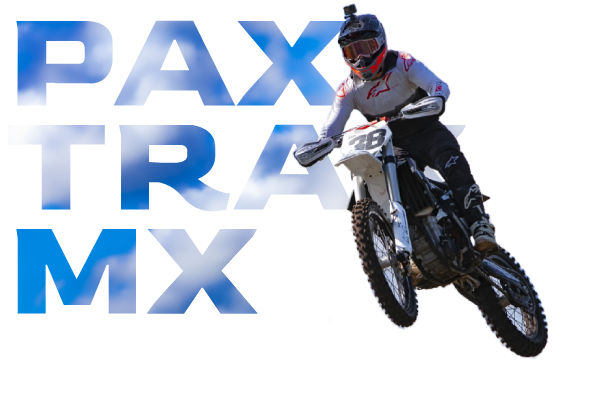
To execute the proper basic jumping technique you should be standing in the central body position. As the rear wheel rebounds from the jump you have to nudge your body position back, which will also cause you to nudge back on the handlebars. The steeper the jump face is and the faster you hit it the faster and harder you will have to nudge back in order to make the bike fly level or how you want it to fly (front end high or low).
Starts are sort of like gun fighting. A gun fighter has to be quick on the draw but at the same time he has to be smooth and have a good aim in order to hit the target before the target hits him. In motocross you also have to be quick and at the same time you have to be smooth with your clutch and throttle control and your body movements. If you mess up at least you won’t get shot but you may get run over in the first corner.
The rule of the track here is to leave the clutch out while braking so the engine helps slow you down and helps control the braking process. It’s kind of like anti lock brakes. The best stopping power is just before the rear wheel locks up and that’s just what leaving the clutch out will help you with. This is done when you’re still carrying some speed into the corner. If it’s a tight corner where you’re going to be slowing down to a slow speed in the middle of the corner and/or if you’re going to do a brake slide than you have to pull the clutch in so you don’t kill the engine.
Cornering is an art form. To get really good at it you have to have a lot of talent, know all the techniques inside and out and then practice it frequently in many ways over a long period of time.
Straights are usually the easiest but because of the speed you can really crash hard. Of course most of it depends on the soil condition and the room you have for mistakes. If you’re speeding through the trees over rocks, tree roots, ruts and mud you better keep her under control the entire time. Another tricky straight away condition may be over big uneven bumps. Whatever the conditions are following are some key points.
I am really surprised how many people are interested about the technique of riding on the balls of the feet or riding on the arches. I’ll tell you right up front that being comfortable riding on the balls of the feet takes a lot of practice. But when a rider does become comfortable with this technique there are three benefits to it. # 1 you have more body travel, #2 you won’t hit the shifter or rear brake by accident and #3 you won’t get your feet ripped off the foot pegs from your toe hitting the dirt. As I said, for this technique to become natural its takes a lot of the correct type of practice. So don’t throw it out the window if it feels awkward at first.